
Authentic Dua for Shaban (Arabic, Transliteration, Translation)
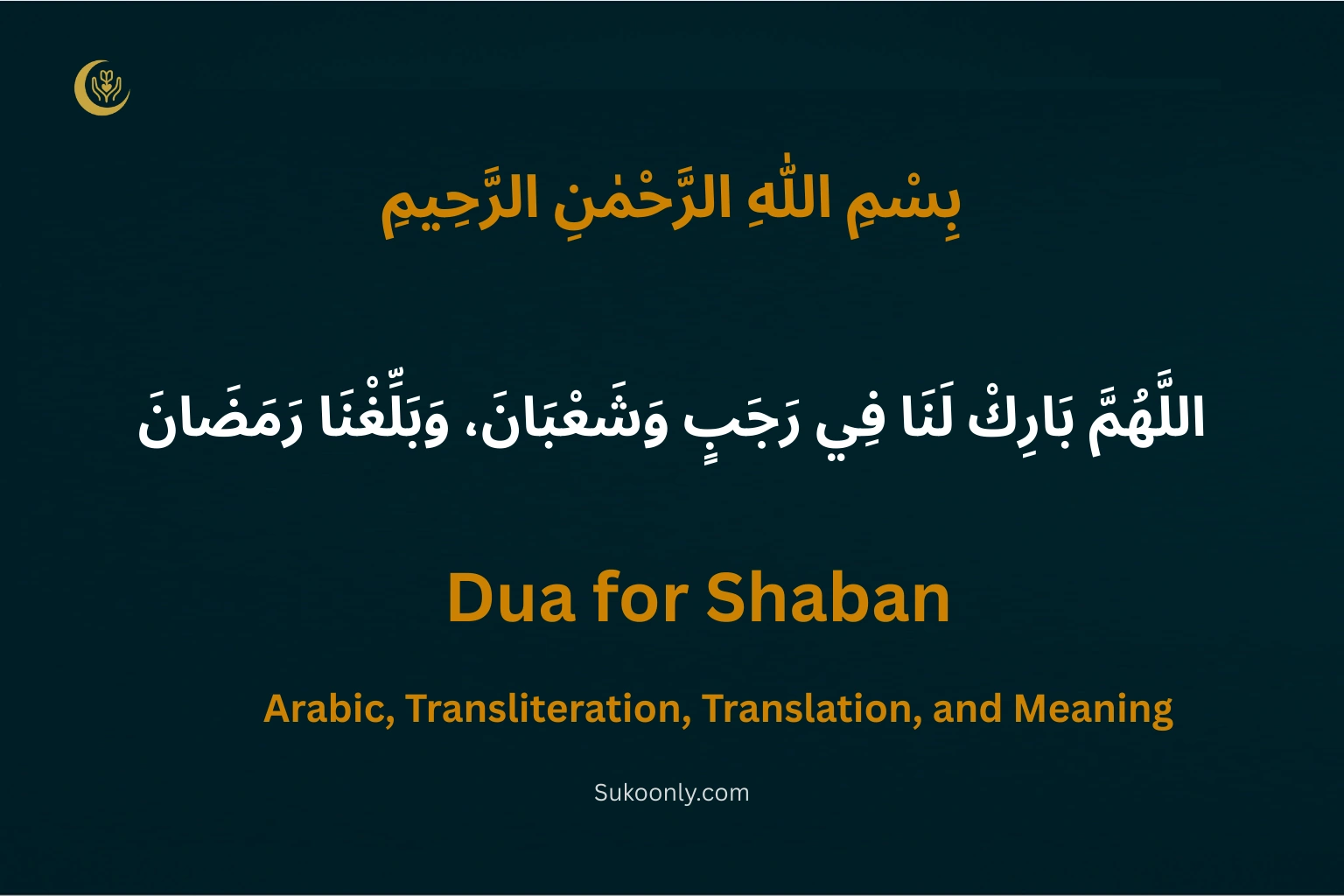
The well-known dua for Shaban is a heartfelt prayer asking Allah ﷻ to bless these months and grant us the chance to reach Ramadan. It is reported in hadith that the Prophet Muhammad ﷺ would recite this supplication at the beginning of Shaban: Arabic (النص العربي):
اللَّهُمَّ بَارِكْ لَنَا فِي رَجَبٍ وَشَعْبَانَ، وَبَلِّغْنَا رَمَضَانَ
Transliteration:
Allahumma bārik lanā fī Rajaba wa Sha‘bāna wa ballighnā Ramaḍān.
Translation:
“O Allah, bless us in Rajab and Shaban, and allow us to reach Ramadan.”
When to Recite the Dua in Shaban?
The dua for Shaban can be recited at any time during the month as part of daily dhikr. It is reported that the Prophet Muhammad ﷺ would say this prayer at the start of Shaban, which is why scholars consider it a practice from the Sunnah. Since Shaban is a month of spiritual preparation for Ramadan, making dua and remembering Allah ﷻ regularly holds even greater value. Many Muslims repeat this supplication often—when the month begins, during their private duas, and while asking Allah ﷻ for barakah and the blessing of reaching Ramadan with faith and good health.Etiquette of Reciting Dua in Shaban
When reciting the dua for Shaban, Muslims are encouraged to follow the etiquettes of dua found in the Qur’an and Sunnah. This means beginning with hamd (praising Allah ﷻ) and sending salawat upon the Prophet Muhammad ﷺ, facing the Qibla, and raising the hands with humility. The dua should be said with sincerity and khushuʿ (a heart focused and present), without rushing or being distracted. Scholars also advise strengthening this practice by combining it with nafl fasting, qiyam al-layl (night prayer), and frequent remembrance in Shaban. These devotional acts nurture the spirit and prepare the soul for the blessed month of Ramadan.Qur’anic & Prophetic References on Shaban
The Qur’an does not mention Shaban by name, but it calls believers to prepare for worship, seek forgiveness, and renew their intention before Ramadan. Scholars explain that Shaban carries this role, serving as a month of extra devotion and sincere supplication. In the Sunnah, authentic narrations show that the Prophet Muhammad ﷺ gave special attention to this month, especially through fasting. Aisha (رضي الله عنها) said she never saw the Prophet ﷺ fast in any month more than in Shaban, apart from Ramadan. These narrations remind us that Shaban is a season of fasting, dua, and spiritual readiness for the blessed month of Ramadan.FAQs (Dua for Shaban)
The Qur’an does not mention a dua for Shaban, but hadith narrations tell us that the Prophet Muhammad ﷺ would say:
“O Allah, bless us in Rajab and Shaban, and allow us to reach Ramadan.”
This simple yet powerful dua is cherished by Muslims who seek barakah before Ramadan.
Yes. Shaban is a month of spiritual preparation, and believers are encouraged to make general supplications for forgiveness, mercy, and guidance. Any sincere dua in this month brings a person closer to Allah ﷻ and prepares the heart for Ramadan.
The 15th night of Shaban, known as Laylat al-Nisf, is observed in many Muslim communities. Scholars differ about the strength of its narrations, but making dua, seeking forgiveness, and asking for Allah’s mercy on this night—or any night—remains a commendable act.
Yes. The Prophet Muhammad ﷺ often fasted in Shaban, and fasting is a Sunnah of this month. Reciting the dua while fasting or during other acts of worship adds sincerity and helps believers prepare spiritually for Ramadan.
More in the Duas — By Purpose Series
Hub Page
Related Pages

Mohammed Basheer Orsala is the founder of Deenify.org (formerly Sukoonly.com) - an Islamic resource dedicated to verified Quranic duas and Sunnah-based supplications. A self-taught Islamic researcher, he has studied classical texts and authenticated hadith collections including the works of Imam al-Nawawi, Shaykh al-Albani, Ibn Hajar al-Asqalani, and Ibn al-Qayyim. He writes to make verified Prophetic supplications accessible to English-speaking Muslims worldwide.